
Answers or Companionship
When life gets hard, what do I really need?

Most of us would welcome a heavenly messenger with instructions for our deepest dilemmas. Or at least we think we would. “Should I quit my job?”, “Should we increase our 401K contribution?” “Should we vacation at the beach or the mountains?” Faced with thousands of decisions each day, we often reply, “I don’t know.” Who hasn’t wished for some kind of prepared directive from an all-wise source?
If ready-made answers are tempting, they are especially appealing when anxiety runs high and the world seems upside down. I’ve found that one of the most difficult parts of my recent move to a new city is the dramatic increase in the number of decisions I have to make. I need an auto mechanic, electrician, appliance repairperson, doctor, pharmacy, driver’s license, gutter clean out guy, a post office, and so much more. I would love to tell a guardian angel, “Just give me the number I need to call and tell me where to go.”
Asking directions
I say I’d welcome that guardian angel, but my behavior says otherwise. Do I really want life direction from somebody else? I don’t even want to ask a clerk for directions in the store.
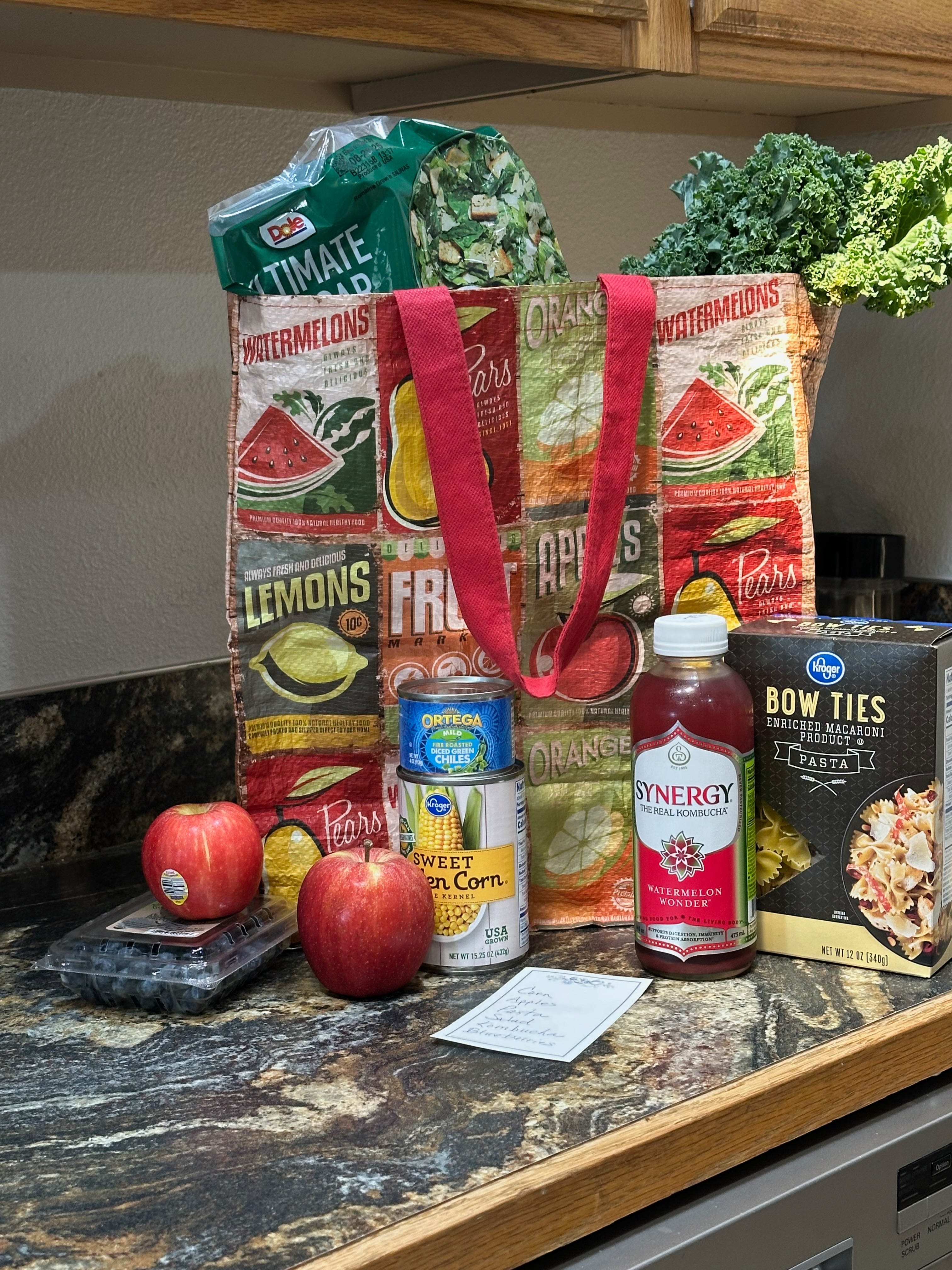
I love Kombucha. It’s a refreshing bottled tea with probiotics and a fizzy tang. The grocers of America can’t decide where to display it and the average grocery clerk has never heard of it. Sometimes it’s near the produce section, sometimes with other bottled teas, or it might be next to the “green” smoothies. I sometimes find it in a case of its own at the far corner of the store. I’ve asked multiple clerks where to find the stuff. Way more than half the time they respond with a blank look and the question, “What did you say you are looking for?” I explain that it’s a bottled fizzy tea. That’s when they go into “fake it till you make it” mode. Equipped with the word tea, or bottle, they send me to a related portion of the store, where, finding no Kombucha, I continue the search on my own.
If I don’t trust the directions from a store clerk, would I trust the expertise of a guardian angel? I doubt it. There’s a “do it yourself” kind of spirit that kicks in for me when there is a decision to make. I may think I want advice, but when I actually receive it, I’m not so sure.
Asking more questions
The last few months have eliminated “autopilot” assumptions for me. Personal decisions about prioritizing my time or spending money force me to choose between conflicting values. And in the larger society I wrestle every day with pressures to advocate for, pray for, worry about, ignore, or engage with the disturbing turmoil in my news feed. The question that rises spontaneously from my soul isn’t new, it’s spelled out in the Bible’s ancient book of Psalms, “How long O Lord?” (see Psalm 13)
Which leads me back the idea of heavenly messengers. Do I really want an answer to my question? Would I find comfort in an angelic text informing me that I would need to grapple with this chaos for …say the next 2.4 years?
Not likely. Such an answer will only lead to more questions. Will I have to suffer greater distress? Will my community be harmed?... Apparent answers often bring more questions of their own.
I’m wondering if questions like “How long O Lord?” are more of a confession than an inquiry. Which half of the question truly resonates with my soul, the “How Long” or the “O Lord?” Is the question driven by my fear that I can’t resolve my deepest concerns without help? Does the plea acknowledge my inability to find the way alone?
Asking for help
Connections to caring others are central to psychological security* (reference below). This principle is core to the role that parents/caregivers play in a young child’s life and continues throughout life with those who will come along side us in our deepest needs.
I am concluding that far more than I want answers to life’s dilemmas, I want the presence of caring companions. I need others in my life that stay connected to me, even when we like different things or disagree about important issues. Far more important are the basics of our shared experience and our human need. This mutuality makes possible a kind of wholeness that binds us together in human community that transcends our unique preferences or situations.
I know this is a big “ask.” Human history is full of our failure to embrace one another in mutual relationships. Our default position is more often one of distrust and self-protection. Ultimately, we fail each other. But out of the distress of life, the plea “O Lord” continues to rise spontaneously.
Which causes me to wonder what a difference it would make if we were more ready to walk alongside each other than to “fake it” or improvise. Far worse than not knowing the answer is to dismiss another’s concern in order to maintain a false sense of knowledge or competence.
What would it look like if the next time I asked for directions to the Kombucha, the clerk said, “I’m not even sure if we carry that product. Where have you looked? Let me show you a couple of other places it might be.”
I’ll admit, this is a wishful scenario. Grocery store clerks are mostly way too busy. But the concept might help the rest of us. We will probably always be tempted to “fake it till we make it” when our child is brokenhearted over conflicts with friends. Or when a loved one is diagnosed with a terrible disease. Or when my friend explains her opinion and I am pretty sure she’s missing some critical information. But what if we avoided the temptation to appear wise and committed instead to “be there” even if we didn’t grasp the whole situation or have simple answers? What if instead of advice we looked for insight into the other’s need?
I want to be more like a grocery store clerk who doesn’t know, but takes the time to see if we can find the tea together.
You didn’t mention, which church should I attend?! Tee hee!
Yes!!!😊